
📂 목차
📚 본문
Servlet Authentication Architecture
이제 security 가 Servlet 에서 어떻게 동작하는지 보자.
다음 클래스들을 기억하자:
-
SecurityContextHolder: 인증된 사용자의 세부 정보를 저장하는 곳
-
SecurityContext: SecurityContextHolder 에서 가져오는 객체이며, 현재 인증된 사용자의 Authentication 객체를 포함하게 된다.
-
Authentication: 사용자가 로그인 시 입력한 자격 증명(
Credentials) 를 담아 AuthenticationManager 에 전달하기 위해 입력으로 사용되거나 또는 현재 SecurityContext 에 저장되어 있는 현재 사용자 정보일 수도 있음 -
GrantedAuthority:
Authentiation내의Principal(주체, 즉 사용자) 에게 부여된 권한을 나타냄 -
AuthenticationManager: Spring Security 의
Filter들이 인증을 수행할 때 사용하는 인증 수행 API 이다. -
ProviderManager: AuthenticationManager 의 가장 일반적인 구현체
- AuthenticationProvider: ProviderManager 가 특정 종류의 인증을 수행하기 위해 사용하는 구체적인 인증 로직 담당자
- 폼 로그인, OAuth2, JWT 등 각 방식별 인증 로직을 구현함
-
Request Credentials with AuthenticationEntryPoint: 클라이언트에게 자격 증명을 요청할 때 사용하는 구성 요소이다.
- AbstractAuthenticationProcessingFilter: 인증 과정을 수행하는
Filter클래스이며, 이 클래스는 인증이 어떻게 처리되는지 각 구성요소가 어떻게 상호작용하는지에 대한 고수준 흐름을 보여준다.
즉, SecurityContextHolder 에 사용자의 인증 정보가 저장되며, 그 과정을 AuthenticationManager -> AuthenticationProvider -> SecurityContext 순으로 거쳐 처리된다는 설명이다.
SecurityContextHolder
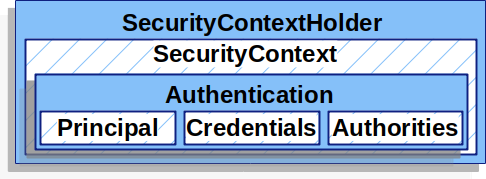
SecurityContextHolder 는 Spring Security 가 인증된 사용자의 세부정보를 저장하는 곳이며, SecurityContextHolder 가 어떻게 채워지는지에 대해서는 신경쓰지 않는다. 단, 값이 존재하면 그 값을 현재 인증된 사용자로 간주한다.
SecurityContext context = SecurityContextHolder.createEmptyContext();
Authentication authentication =
    new TestingAuthenticationToken("username", "password", "ROLE_USER");
context.setAuthentication(authentication);

SecurityContextHolder.setContext(context);
위는 태스트용 가짜 정보를 만들어서 컨텍스트 홀더의 빈 컨텍스트에 Spring Security 가 관리하도록 가짜 정보를 넣어준다. 저장될 때 다음의 Authentication 구현이 들어가야 한다.
public interface Authentication extends Principal, Serializable {

    Collection<? extends GrantedAuthority> getAuthorities();  // 권한 목록

    Object getCredentials();  // 비밀번호 (인증 후 보통 null)

    Object getDetails();  // 추가 정보 (IP, 세션 등)

    Object getPrincipal();  // 주체 (보통 UserDetails 또는 username)

    boolean isAuthenticated();  // 인증 여부

    void setAuthenticated(boolean isAuthenticated);
}
여기서 credentials, details, principal 는 Object 이고, 모든 값들이 저장될 수 있음을 볼 수 있다. SecurityContext 내부에는 Authentication 을 저장하기 위한 공간이 있는데, 이는 ThreadLocal 로 정의되어 있어서 각 요청마다 다른 스레드가 이 요청의 흐름을 맡게 되기 때문에 각 요청마다 독립된 저장소를 가지게 된다.
이때 현재 사용자의 요청 처리가 끝난 후 해당 스레드를 반드시 정리해야 안전하게 된다. Spring Security 의 FilterChainProxy 는 항상 SecurityContext 가 정리되도록 보장하기 때문에 개발자는 이를 신경쓰지 않아도 된다.
하지만 일부 어플리케이션은 ThreadLocal 을 사용하는 것이 적합하지 않을 수도 있는데, Swing 클라이언트는 JVM 내의 모든 스레드가 동일한 보안 컨텍스트를 사용하고 싶을 수도 있다. 이 경우는 다음 SecurityContextHolder 에게 명시해주어야 한다.
- 독립 실행형 어플리케이션인 경우:
SecurityContextHolder.MODE_GLOBAL - 보안 컨텍스트를 가진 스레드가 생성한 하위 스레드(sub-thread) 들도 동일한 보안 신원(security identity)을 상속받도록 하고 싶다면
SecurityContextHolder.MODE_INHERITABLETHREADLOCAL전략을 사용
이를 적용하는 방법은 두 가지인데
- 시스템 프로퍼티에 설정으로 넣음
- JVM 시작옵션
-Dspring.security.strategy=MODE_GLOBAL
- JVM 시작옵션
- SecurityContextHolder 의 정적 메서드를 호출
// MODE_GLOBAL, MODE_THREADLOCAL, MODE_INHERITABLETHREADLOCAL 중 선택 가능
SecurityContextHolder.setStrategyName(SecurityContextHolder.MODE_GLOBAL);
SecurityContext
SecurityContextHolder 가 가지고 있는 객체이며, 내부에는 Authentication 을 가지고 있다. 이 Authentication 이 중요하다.
Authentication
Authentication 은 크게 두 역할을 한다.
- 사용자 인증 요청 시 입력값 역할
- 사용자가 입력한 자격 증명을
AuthenticationManager에 전달할 때 사용 - 이 단게에서
isAuthenticated()값은false - 아직 인증이 완료되지 않은 상태를 의미
- 사용자가 입력한 자격 증명을
- 현재 인증된 사용자 정보 표현
- 인증이 완료 시,
Authentication객체를 통해 현재 로그인된 사용자 정보를 얻어올 수 있음
- 인증이 완료 시,
Authentication 은 위를 수행하기 위해 아래의 정보들을 가진다.
Principal(주체)
사용자를 식별하는 정보이며, 일반적으로 아이디/비밀번호 로그인의 경우 UserDetails 객체의 인스턴스가 여기에 들어가게 된다.
Credentials(자격 증명)
주로 비밀번호가 여기에 저장되게 된다. 보안 상의 이유로 사용자가 인증된 후에는 이 값이 지워지는 경우가 많다.
Authorities
GrantedAuthority 객체들의 집합, 사용자가 가진 상위 수준의 권한(Permission)들을 나타낸다. 대표적인 예로 역할(Role) 과 범위(Scope) 가 있다.
import org.springframework.security.authentication.UsernamePasswordAuthenticationToken;
import org.springframework.security.core.authority.SimpleGrantedAuthority;
import org.springframework.security.core.context.SecurityContextHolder;

import java.util.List;

public class SecurityExample {
    public static void main(String[] args) {

        // 1️⃣ 사용자 권한 설정 (예: ROLE_USER, ROLE_ADMIN)
        List<SimpleGrantedAuthority> authorities = List.of(
                new SimpleGrantedAuthority("ROLE_USER"),
                new SimpleGrantedAuthority("ROLE_ADMIN")
        );

        // 2️⃣ 사용자 정보 (principal)와 비밀번호(credentials) 지정
        String username = "kim";
        String password = "1234"; // 보통 인증 후엔 이건 null로 설정함

        // 3️⃣ Authentication 객체 생성
        UsernamePasswordAuthenticationToken authentication =
                new UsernamePasswordAuthenticationToken(username, password, authorities);

        // 4️⃣ SecurityContext에 설정
        SecurityContextHolder.getContext().setAuthentication(authentication);

        // ✅ 확인
        var auth = SecurityContextHolder.getContext().getAuthentication();
        System.out.println("현재 사용자: " + auth.getName());
        System.out.println("권한 목록: " + auth.getAuthorities());
        System.out.println("인증 여부: " + auth.isAuthenticated());
    }
}
여기서 GrantedAuthority 가 사용자가 부여받은 상위 수준의 Permission 을 나타낸다. 보통 Authentication.getAuthorities() 메서드를 통해 GrantedAuthority 들을 가져오게 되고, 컬렉션 형태로 반환하게 된다. 권한은 일반적으로 ROLE_(이름) 형태로 표현되게 된다.
위처럼 정의된 역할들은 이후에:
- 웹 요청 접근 제어
- 메서드 권한 제어
- 도메인 객체 권한 제어
에 사용되게 된다. 이런 권한은 그래서 어플리케이션 전역에서 다뤄지게 된다.
AuthenticationManager
Spring Security 의 필터들이 인증을 수행하는 방식을 정의하는 API 이며, AuthenticationManager 가 반환한 Authentication 객체는 이를 호출한 컨트롤러, 정확히는 Spring Security 의 필터 인스턴스에 의해 SecurityContextHolder 에 저장되게 된다.
만약 Spring Security 의 필터 체인을 사용하지 않는다면, SecurityContextHolder 에 직접 Authentication 을 설정할 수도 있고, 이 경우에는 AuthenticationManager 를 꼭 사용할 필요는 없다(그럴 일은 아직 없을 듯하다).
ProviderManager
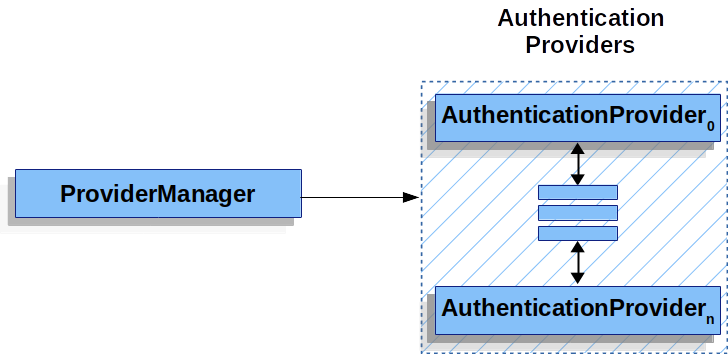
여러 개의 AuthenticationProvider 인스턴스들을 List 형태로 가지고 있으며, 각 AuthenticationProvider 는 다음 중 하나를 결정할 수 있다.
- 인증이 성공했다고 판단
- 인증이 실패했다고 판단
- 자신은 이 인증 타입을 처리할 수 없으므로 다음
AuthenticationProvider가 판단하도록 위임
즉 인증 과정은 여러 AuthenticationProvider 를 순차적으로 거치며, 각 Provider 가 인증을 시도하다가 어느 하나가 성공을 반환하면 인증이 종료되게 된다. 만약 모든 AuthenticationProvider 가 인증을 처리하지 못하면 실패이다.
실패 예외는
ProviderNotFoundException
실제로 AuthenticationProvider 는 다양한 형태의 인증 방식을 처리하는 방법을 알고 있다(이미 제공해준다는 말).
AuthenticationProvider중에 아이디/비밀번호를 검증하는 Provider가 있을 수 있고- SAML 어서션 을 통해 인증하는 Provider 도 있을 수 있다.
우리가 이를 Provider 를 추가하려면 하나의 AuthenticationManager 을 Bean 으로 등록만 하면 된다.
실제로 여러 개의 ProviderManager 인스턴스가 하나의 부모 AuthenticationManager 를 공유할 수도 있다.
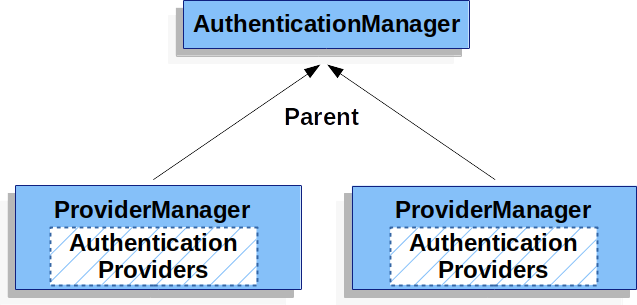
일부 공통된 인증 로직은 공유된 부모 AuthenticationManager 가 처리하고, 각 체인마다 서로 다른 인증 방식을 적용해야 하는 경우는 공통 부모를 두어서 공유 가능한 로직만 AuthenticationManager 로 두어 처리하게 하고, ProviderManager 1, 2 가 서로 갈 길 가는 즉, 서로 각자의 FilterChain 을 거치도록 하면 된다.
AuthenticationProvider
실제 인증 로직을 수행하는 핵심 객체이며, ProviderManager 에 여러 개 주입할 수 있다.
DaoAuthenticationProvider: 일반적인 아이디 / 비밀번호 인증JwtAuthenticationProvide: JWT 토큰 기반 인증
Request Credentials with AuthenticationEntryPoint
클라이언트에게 인증 정보를 요청할 때 사용되는 컴포넌트이며, 동작 방식을 보자:
- 클라이언트 인증 없이 보호된 리소스를 요청하면,
AuthenticationEntryPoint가 호출 - HTTP 응답으로 자격 증명 요구 -> 로그인 페이지 리다이렉트 혹은
WWW-Authenticate헤더 등
예외: 클라이언트가 이미 인증 정보를 보내는 경우에는
AuthenticationEntryPoint가 별도로 요청을 만들지 않음
AbstractAuthenticationProcessingFilter
사용자 인증 요청을 처리하는 Filter
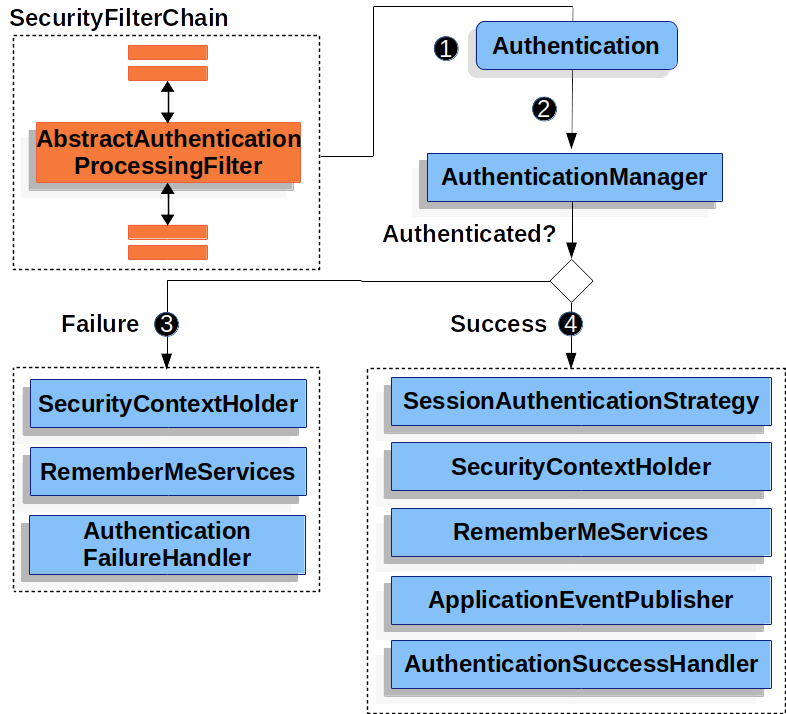
인증 과정
- 사용자가 인증 정보 제출
AbstractAuthenticationProcessingFilter가HttpServletRequest로 부터 인증 정보 읽음AbstractAuthenticationProcessingFilter가Authentication객체를 생성, 이때Authentication객체의 타입은 서브 필터에 따라 다름UserPasswordAuthenticationFilter->UsernamePasswordAuthenticationToken생성- API 토큰 필터라면 JWT 토큰 기반
Authentication생성
- 이
Authentication을AuthenticationManager로 전달 - 내부적으로 여러
AuthenticationProvider가 순차적으로 인증 시도
성공
- 성공 시
SessionAuthenticationStrategy알림- 새 세션이 생성되거나 기존 세션 보호 등 세션 관련 처리
SessionAuthenticationStrategy인터페이스
SecurityContextHolder의 Authentication 설정- (선택)
SecurityContext저장
- (선택)
RememberMeServices.loginSuccess호출- 없으면 동작 X
InteractiveAuthenticationSuccessEvent발행AuthenticationSuccessHandler호출
실패
- 실패 시
SecurityContextHolder초기화RememberMeServices.loginFail()호출AuthenticationFailureHandler호출- 인증 실패 시 추가 처리(리다이렉트, 에러 메시지 등)
큰 틀을 보았으니 이제 이를 실제로 코드에서 적용시켜보자.